
Discussion focuses on diaspora investment, national development, security and the challenges facing Somali investors
ROTTERDAM, THE NETHERLANDS .
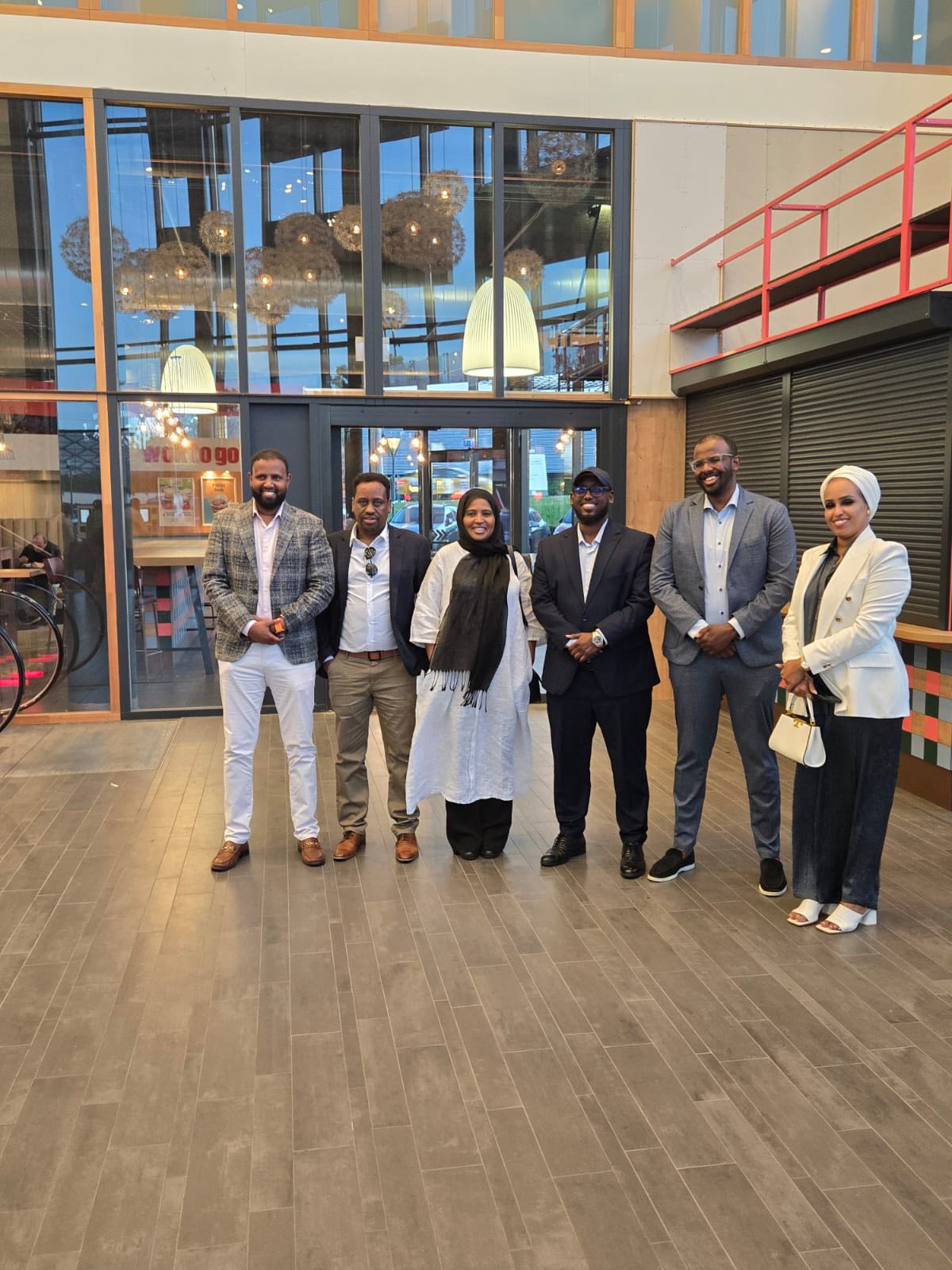
The Center for Media and Dialogue (CMD) hosted a welcoming event and dialogue with Somali presidential candidate Mr. Abdirahman Abdishakur Warsame, bringing together members of the Somali diaspora, businesspeople, investors, community representatives, and other guests for a discussion about Somalia’s future.
The meeting focused on several issues of importance to Somalis living abroad, particularly the role of the diaspora in Somalia’s reconstruction and economic development. Participants discussed how Somali professionals, entrepreneurs, and investors in the Netherlands and elsewhere in Europe can contribute to the country while also addressing the challenges that can make investment difficult.
The discussion also covered Somalia’s security situation, political stability, the relationship between the country and its diaspora, and the need for stronger systems that can encourage Somalis living abroad to return, invest, and participate in the development of their country.
The diaspora and Somalia’s development
A central theme of the meeting was the significant role played by the Somali diaspora in supporting Somalia.
For decades, Somalis living abroad have contributed to their communities and families through remittances and other forms of support. In recent years, members of the diaspora have also increasingly become involved in business, construction, education, healthcare, technology, real estate, and other sectors inside Somalia.
During the meeting, participants discussed how this contribution could develop further, particularly by encouraging Somali investors in the Netherlands to consider opportunities in Somalia while ensuring that they have the necessary conditions to operate with greater confidence and security.
For many diaspora investors, the decision to invest in Somalia involves both opportunity and uncertainty. Participants highlighted concerns surrounding security, regulations, bureaucracy, access to reliable information, infrastructure, dispute resolution, and the protection of investments.
The discussion therefore moved beyond the question of whether the diaspora wants to invest. It focused on what institutions and government systems can do to make that investment process easier, more transparent, and more secure.
Abdirahman Abdishakur Warsame on the growing role of the diaspora
Mr. Abdirahman Abdishakur Warsame highlighted what he described as the increasing number of Somalis returning to the country and becoming involved in rebuilding and developing Somalia.
He pointed to members of the diaspora who have returned to establish businesses, invest in different sectors, create employment opportunities, and contribute to reconstruction efforts.
According to Warsame, the Somali diaspora represents an important resource for the country’s future, not only because of its financial capacity but also because of the professional experience, knowledge, international networks, and skills that many diaspora Somalis have developed abroad.
The discussion emphasized that diaspora engagement should extend beyond financial remittances. It can also involve entrepreneurship, technology transfer, professional expertise, education, investment partnerships, and the creation of connections between Somalia and international markets.
Addressing the challenges facing investors
One of the most important parts of the meeting was the discussion about the obstacles Somali diaspora investors face when attempting to establish or expand businesses in Somalia.
Participants shared concerns about the practical difficulties involved in investing from abroad and the need for clearer procedures and stronger institutional support.
For investors living in the Netherlands, for example, investing in Somalia can require navigating two very different business environments. Distance, limited access to reliable information, regulatory uncertainty, and concerns about security can make the process more complicated.
The participants discussed the importance of creating an environment where investors can understand the rules, register businesses efficiently, protect their investments, resolve disputes, and operate without unnecessary administrative barriers.
The conversation also highlighted the importance of building trust between diaspora investors and institutions inside Somalia.
Security remains a central concern
Security was another major issue discussed during the meeting.
Warsame acknowledged the importance of the security situation to Somalia’s economic and political future. He argued that continued progress in security is essential if Somalia is to attract greater investment and encourage more members of the diaspora to return.
The relationship between security and investment was a recurring theme throughout the discussion.
For businesses considering long-term investments, security is closely connected to confidence. Investors need to know that their businesses, employees, assets, and operations can function within a stable environment.
Participants also discussed the broader need for lasting peace and institutions capable of maintaining security across the country.
Warsame emphasized the need for a government capable of delivering what he described as comprehensive national peace and creating conditions in which citizens and members of the diaspora can contribute to the country’s development.
A personal connection to the diaspora
One of the points emphasized by Warsame during the meeting was his own experience as a member of the Somali diaspora.
He said this background gives him a personal understanding of some of the challenges faced by Somalis living abroad, particularly those who want to return to Somalia, establish businesses, or contribute to the country’s development.
He told participants that, if he becomes president in the future, he would place greater focus on the Somali diaspora and work to facilitate their investment and participation in Somalia.
His message was particularly relevant to the audience in the Netherlands, where a significant Somali community has established businesses and professional networks across different sectors.
The discussion reflected a broader question facing Somalia: how can the country transform the strong connection between Somalis abroad and their homeland into long-term investment, skills, entrepreneurship, and institutional development?
From remittances to investment
For years, remittances have remained an important connection between the Somali diaspora and families in Somalia.
The conversation at the CMD event explored how that relationship could increasingly develop into direct investment and business partnerships.
Somali diaspora entrepreneurs in Europe have access to capital, professional networks, technology, education, and international business experience. Somalia, meanwhile, has a young population, growing demand for services, and opportunities across sectors including agriculture, telecommunications, construction, energy, healthcare, education, logistics, and technology.
The challenge, participants noted, is creating the conditions that allow these resources to meet effectively.
Investment decisions are rarely based on opportunity alone. Investors also consider security, transparency, legal protection, infrastructure, market access, and the reliability of institutions.
Creating stronger links between Somali institutions and diaspora business communities could therefore play an important role in encouraging further investment.
A conversation about Somalia’s future
Beyond the specific issue of investment, the meeting provided an opportunity to discuss the broader direction of Somalia.
The future of the country, participants agreed, is closely connected to the ability of Somalis inside and outside the country to work together.
The diaspora is not a separate part of the Somali story. It is deeply connected to Somalia through family, business, culture, education, professional networks, and investment.
At the same time, meaningful diaspora participation requires engagement from institutions inside the country.
Creating clear channels for dialogue between government institutions, investors, professionals, and diaspora organizations can help identify challenges and develop practical solutions.
CMD’s role in encouraging dialogue
For the Center for Media and Dialogue, hosting the discussion reflects CMD’s broader commitment to creating spaces for informed conversation about issues affecting Somalia and Somali communities around the world.
The organization seeks to bring together different voices and perspectives on political, social, economic, security, and community issues.
The meeting with Mr. Abdirahman Abdishakur Warsame provided an opportunity for members of the Somali community in the Netherlands to directly raise questions and share their experiences concerning Somalia’s future.
It also demonstrated the importance of maintaining dialogue between political figures and members of the diaspora, particularly on issues that directly affect their ability to contribute to Somalia’s development.
Looking ahead
The discussion in the Netherlands highlighted both the opportunities and challenges surrounding diaspora engagement.
There is a growing interest among Somalis abroad in participating directly in Somalia’s economic development. But turning that interest into long-term investment requires conditions that give investors confidence.
Security, transparent institutions, clear regulations, reliable infrastructure, and accessible investment procedures remain important considerations for anyone looking to establish or expand a business in Somalia.
For CMD, the conversation was an opportunity to place these issues at the center of a wider discussion about Somalia’s future.
As Somalia continues to work toward greater political stability, security, and economic development, the relationship between the country and its diaspora will remain an important part of that conversation.
The meeting concluded with a shared emphasis on the potential of Somalis around the world to contribute to the country’s future, whether through investment, entrepreneurship, professional expertise, community engagement, or other forms of participation.
For the Somali diaspora in the Netherlands, the message was clear: the connection with Somalia extends beyond borders, and the future of that relationship will depend on creating meaningful opportunities for people abroad to contribute to the country’s development while building the confidence and institutions needed to support their participation.
Center for Media and Dialogue (CMD)
Rotterdam, The Netherlands